
How Long Does Biodegradable Bike Lube Last?
Last Updated: November 4, 2026
Quick Summary
Biodegradable bike lube typically lasts a few hundred kilometres on a dry, clean chain, though no single figure fits every ride. Wet, muddy or gritty conditions shorten its life, so check the chain after every ride and reapply when it looks dull or dirty.
- Reapply every 200 to 300 km in dry, clean conditions.
- Reapply after every wet ride, or every 100 km when riding in wet or muddy conditions.
- Clean the chain before applying fresh lube if it looks dark, tacky or gritty.
- Do not wait for a squeak; by then grit is already working into the rollers.
- Log kilometres and conditions between applications to find your own reliable interval.
Table of Contents
- How Long Biodegradable Bike Lube Lasts on a Typical Chain
- How Often to Lube a Bike Chain: A Practical Interval Chart
- Dry, Wet, Wax and Eco Lubes: What Changes the Lifespan
- How Long Does Dry Bike Lube Last Compared With Wet Lube
- Bike Chain Lube in Wet Weather: What Washes Off and When
- Cleaning and Applying Bike Chain Lube the Right Way
- Signs Your Biodegradable Lube Has Worn Off and Your Next Step
- Frequently Asked Questions
How Long Biodegradable Bike Lube Lasts on a Typical Chain
The exact lifespan of biodegradable bike lube depends on weather, grit and how often you ride. At Airolube, we know that is a vague answer, so this guide gives you a clear way to judge how long biodegradable bike lube lasts on your own bike.
Most riders ask one question first: how long does biodegradable bike lube last before it needs another coat? The honest answer is that no single number fits every ride.
Here is what usually shapes the result:
- Riding conditions: dry roads and indoor riding are kind to lube; wet, muddy or gritty rides strip it faster.
- Lube type: wax-based products generally hold up longer than thin oils in dry conditions.
- Chain cleanliness: a chain full of old grit wears lube out quicker than a clean one.
- Distance and time: longer rides and more hours in the saddle use lube up sooner.
Watch out: do not wait for a squeak before you relube. By then the chain has already been running dry, and grit is working into the rollers.
A realistic lifespan range for biodegradable lube
These ranges assume a clean, correctly applied chain, a rider of average weight and power, and a lube applied to the rollers with excess wiped off. They are guidance, not a manufacturer guarantee. A heavier rider, a hilly route or a gritty canal-side path will shorten them; a light rider on smooth tarmac will stretch them.
Why biodegradable formulas sit at the shorter end
Many biodegradable lubes are built on plant-based oils or water-soluble carriers. That chemistry is what makes them break down in the environment, but it also means they can be thinner and more readily displaced by water than a heavy synthetic wet lube. In practice, a biodegradable lube may match a conventional dry lube in dry weather and fall behind a dedicated wet lube in sustained rain. The label rarely states a distance, so treat any 'long-lasting' claim as a claim about ideal conditions until your own chain log says otherwise.
How to turn the range into your own number
Log the kilometres between applications and note the weather and chain condition at each reapplication. Your own log will show a more reliable interval for your riding than any general figure.
How Often to Lube a Bike Chain: A Practical Interval Chart
Use the chart below as a general starting point, then adjust after your first few rides.
| Riding condition | Typical riding pattern | Suggested check or reapply point |
|---|---|---|
| Dry roads, clean | Mostly sunny, short commutes | Every 200 to 300 km or every 2 to 3 weeks |
| Mixed weather | Some rain, regular riding | Every 150 to 200 km or weekly after rain |
| Wet or muddy | Frequent rain, gravel, road spray | After every wet ride, or every 100 km |
| Dusty or sandy | Gravel and dry dirt tracks | Clean and relube every 100 to 150 km |
The safest habit is a quick check after every ride. Wipe the chain with a rag, look for dark grime, and feel for dryness. A chain that looks dull or gritty needs attention, whatever the mileage says.
A decision tool, not just a table
The chart gives a distance, but the real trigger is a combination of distance, weather and what the chain looks and sounds like. Work through these questions after each ride:
- Did the chain get wet? Rain, road spray or a washed bike means reapply before the next ride, even if you covered only 30 km. Water displaces lube from the rollers faster than distance alone.
- Is the chain visibly dry or grey? A dull, matte finish on the rollers means the film is gone. Reapply after a clean.
- Does the chain sound different? A faint squeak or a dry whir is an early warning. A click or stiff link means the lube has already failed and grit is present.
- Is grit sticking to the chain? If the chain feels tacky and collects dust, the lube is attracting contamination. Clean and reapply rather than topping up.
- How far since the last application? Compare against the chart for your dominant condition. If you are within 20 percent of the upper figure, plan a clean and reapply.
Interval adjustments for biodegradable lube
In mixed weather, treat the 150 to 200 km band as 120 to 180 km. In wet or muddy conditions, plan on reapplication after every wet ride rather than waiting for 100 km. On an indoor trainer, the dry, clean range applies and you can often stretch to 300 km or more because there is no rain or road grit.
When to clean rather than top up
Topping up over a dirty chain pushes grit into the rollers. If the chain is dark, tacky or gritty, clean it before applying fresh lube. A simple rule: if you can see grime on a rag after wiping, clean first; if the rag comes away mostly clean and the chain is dry, a top-up is enough. Keep a note of the kilometres between cleans as well as between applications, because a chain that needs cleaning every 100 km will also need lube more often.
Dry, Wet, Wax and Eco Lubes: What Changes the Lifespan
Lube type matters as much as the riding conditions. Each family behaves differently, so it helps to know which one you are using.
- Dry lubes dry to a thin film that resists dust. They suit dry, dusty riding but need cleaning off more often.
- Wet lubes stay oily and handle rain better, but they attract more dirt and need regular degreasing.
- Wax lubes form a protective layer that repels dirt and water. Many riders find they last longer in dry conditions and stay cleaner.
- Eco and plant-based lubes break down more readily in the environment. Their lifespan depends heavily on the formula and the riding conditions.
If you want a wax option for dry conditions, our Ultimate Chain Wax 100ml (€24.95) is built for dust and dry riding, and you can compare it with the Chain Wax for a dry-condition alternative. Both repel dirt, so the chain stays cleaner between services.

How Long Does Dry Bike Lube Last Compared With Wet Lube
Choose dry or wet lube based on your typical ride conditions rather than the label alone.
Bike Chain Lube in Wet Weather: What Washes Off and When
Rain and road spray can wash lube off the chain, so inspect the chain and reapply after wet rides.
For wet-weather riding, the rule is simple: clean first, then relube. Choose a lube built for wet conditions if you ride in rain often. Our guide on how to choose the right bike lubricant for every ride walks through wet, dry and mixed options side by side.
Cleaning and Applying Bike Chain Lube the Right Way
Clean the chain before you apply any new lube. Old lube mixed with grit creates a grinding paste that wears parts faster.
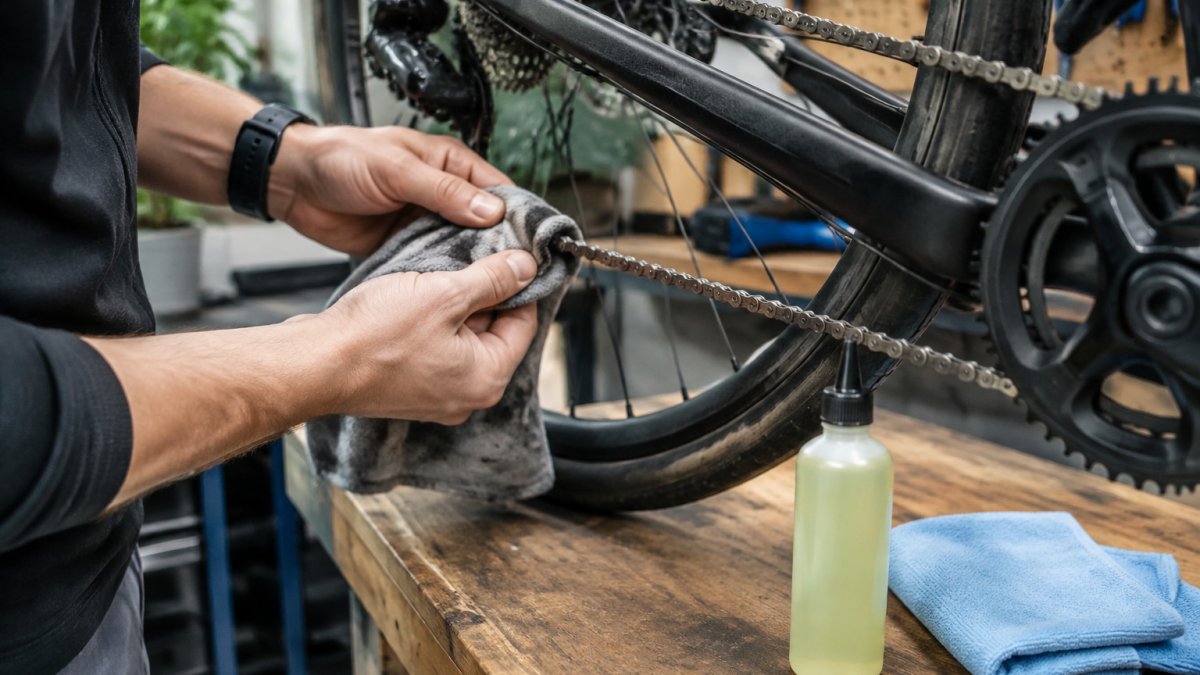
Here is a repeatable routine:
- Shift to the smallest rear cog and wipe the chain with a dry rag.
- Use a degreaser on a brush, scrub the chain, and wipe it clean.
- Let the chain dry fully before applying lube, which usually takes about 10 to 15 minutes.
- Apply one drop per roller while turning the pedals backwards.
- Wipe off the excess so only a thin film remains on the chain.
- Let the lube set for the time the product label recommends before riding.
When you clean, choose a gentle, pH-neutral product that suits delicate finishes. You can read our guide to gentle bike cleaning for sensitive coatings before you start.
For degreasing, the best degreasers for bike cassettes guide compares daily sprays with heavy-duty concentrates.
Watch out: do not flood the chain with lube. Excess drips onto the cassette and pulls in dirt.
Signs Your Biodegradable Lube Has Worn Off and Your Next Step
Bike chain lube often gives warning signs as it wears. Look for these:
- The chain looks dull, dry or greyish instead of slightly glossy.
- Dirt sticks to the chain more than before.
- The drivetrain feels stiff or makes a faint squeak.
- The chain stiffens or clicks between links.
When you see two or more of these signs, clean the chain and apply fresh lube. Keep a note of how many kilometres a lube lasts on your bike, because that record tells you more than any general interval.
Check the chain after every ride to decide when it needs attention. Browse the full bike lubricant range to find the right match for your conditions.
Frequently Asked Questions
How long does biodegradable bike lube last on a chain?
Lifespan depends on the product type, how clean the chain is before application, and the wet or gritty conditions it meets. Lifespan depends on the product type, how clean the chain is before application, and how much water and road grime it meets. Check the chain visually every couple of rides, because a dull, dark or grimy chain is the clearest sign that the lube has worn away and it is time to reapply.
How many kilometres can you ride before reapplying bike chain lube?
Let the chain's appearance and sound confirm when it needs attention, and check it after rain, mud or sandy rides.
Does dry bike lube last longer than wet lube?
Choose based on your typical riding conditions rather than the label alone.
How often should you lubricate a bike chain in wet conditions?
After wet rides, wipe the chain dry where practical, inspect it, and reapply lube once it is clean.
