
How to Clean Matte Car Paint Safely: A Step-by-Step Guide
Last Updated: November 2, 2026
Quick Summary
Clean matte car paint safely by washing with a pH-neutral, wax-free shampoo using the two-bucket method, then blot dry with plush microfiber towels. Never polish, compound, wax, or clay the surface, because abrasives and gloss enhancers destroy the flat texture matte paint depends on.
- Rinse and apply pre-wash foam before any contact, and never start on a dry car.
- Rinse the mitt in the clean bucket after each panel to keep dirty water off the paint.
- Soak bird droppings and tree sap with a matte-safe cleaner instead of scrubbing hard.
- Keep pressure washer nozzles at least 30 cm from matte vinyl wrap and move continuously.
- Avoid products with carnauba, synthetic waxes, silicone oils, or gloss enhancers.
Table of Contents
- What You'll Need Before You Start
- Step 1: Pre-Wash and Rinse to Loosen Contaminants
- Step 2: Choosing the Best Matte Car Wash Soap
- Step 3: The Two-Bucket Hand Wash Method
- Step 4: Drying Without Streaks or Scratches
- How to Remove Stains from Matte Wrap and Paint
- Matte Paint Protection Tips for Long-Term Care
- Common Mistakes and Myths About Cleaning Matte Car Paint
- Frequently Asked Questions
What You'll Need Before You Start
Matte car paint is a finish that scatters light instead of reflecting it, which is why it looks flat and deep rather than glossy. That same surface is far less forgiving than a standard clear coat. The core rule for matte paint is to clean the surface without polishing it. Below, we'll show you exactly what to gather before you touch the car, because the wrong tool does more damage than the wrong soap.
Essential Tools for Matte Car Paint
You do not need a full detailing kit. You need the right handful of items, and nothing abrasive.
- A pH-neutral shampoo, never a wash-and-wax product
- Two clean buckets, ideally with a grit guard in the rinse bucket
- A soft microfiber mitt, not a sponge or brush
- A pressure washer or hose with a gentle spray nozzle
- A foam cannon or pump sprayer for pre-wash
- Several plush microfiber drying towels
- A dedicated matte-safe bug and tar remover
Skip anything labelled "polish," "compound," or "scratch remover." Those contain abrasives that flatten the texture matte paint depends on.
Here is the short list of tools the job actually requires, plus what to leave on the shelf.
| Item | Purpose | Note |
|---|---|---|
| pH-neutral shampoo | Wash soap | Never a wash-and-wax product |
| Two clean buckets | Two-bucket wash | Ideally with a grit guard in rinse bucket |
| Soft microfiber mitt | Contact wash | Not a sponge or brush |
| Pressure washer or hose | Rinse | Gentle spray nozzle |
| Foam cannon or pump sprayer | Pre-wash | Lifts grit before contact |
| Plush microfiber drying towels | Drying | Blot, do not wipe |
| Matte-safe bug and tar remover | Stain removal | Dedicated product |
| Polish, compound, scratch remover | Avoid | Abrasives flatten the matte texture |
Step 1: Pre-Wash and Rinse to Loosen Contaminants
Start with a thorough rinse and a pre-wash foam, and never begin with a dry car. Loose grit is what causes most wash scratches, so your job here is to remove as much of it as possible before any contact.
Rinse from the top down with a gentle spray. Then apply a pre-wash snow foam and leave it to dwell for a few minutes.
Watch out: never let foam or water dry on the panels in direct sun. Drying residue is one of the most common causes of water spots on matte finishes.
Step 2: Choosing the Best Matte Car Wash Soap
The best matte car wash soap is pH-neutral, wax-free, and free of gloss enhancers. Matte paint has no protective gloss layer to hide behind, so anything that leaves a film will show as a patchy sheen.
What most guides miss is how much a wash-and-wax shampoo can ruin a matte surface over time. The wax fills the microscopic texture that makes the finish look flat. A few washes in, you get blotchy, uneven panels that no rinse will fix.
Look for a shampoo that lifts dirt and rinses clean. Our Super Shampoo is pH-neutral and lifts dirt without stripping any existing wax or sealant, which makes it a suitable starting point. You can also browse the full car care range to match a soap to your wash routine.

Step 3: The Two-Bucket Hand Wash Method
The two-bucket method keeps dirty water away from your mitt, and it is the single best habit for scratch-free washing. Fill one bucket with shampoo solution and the other with clean rinse water.
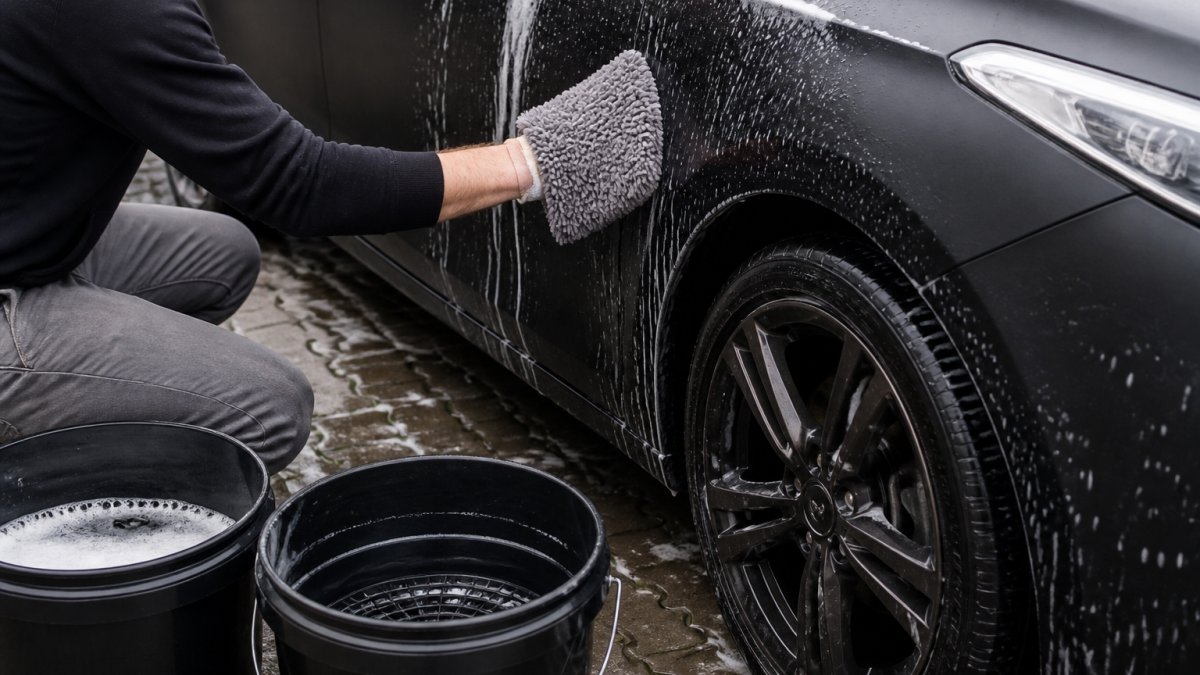
Work one section at a time, top to bottom. Use straight passes, not circles. Rinse the mitt often, and keep the panels wet as you go.
Step 4: Drying Without Streaks or Scratches
Dry matte paint by blotting, not wiping. A plush microfiber towel laid flat and pressed gently lifts water without dragging grit across the surface. Wring it out and move to a fresh towel as it loads up.
If you want to cut down on standing water, use an open hose to sheet the water off before you reach for a towel. Fewer droplets means less contact and less risk.
One honest limitation: blotting takes longer than a quick wipe. That extra minute is what protects the finish.
How to Remove Stains from Matte Wrap and Paint
Remove stains from matte wrap by treating them early with a dedicated, matte-safe cleaner, and never scrub hard. Bird droppings, tree sap, and water spots all bond to the surface over time, so speed matters more than force. Soak the spot, let the product do the work, then lift it gently. The single most useful habit is a spot-test: before any new product touches a visible panel, apply a small amount to a hidden area, the inside of a door jamb, under the fuel flap, or a section of the rear valance, and leave it for a few minutes.
Bird Droppings, Tree Sap, and Water Spots
Bird droppings are acidic and can etch a matte surface if left for days. Soak a microfiber cloth in pH-neutral shampoo solution, lay it over the spot for a few minutes, and wipe gently. Never pick at it with a fingernail. Tree sap is stickier. A dedicated matte-safe tar remover, applied sparingly and rinsed well, loosens it without abrasives. Water spots usually come from minerals left behind by dried droplets, so a fresh rinse and gentle blot often clears them. If a stain will not lift after two gentle attempts, stop.
Why You Cannot Polish or Buff Matte Paint
This is the part most guides leave out, and it is the most important thing to understand about stain removal on matte surfaces. On a glossy car, a light scratch or a stubborn mark can be polished out because polishing removes a microscopic layer of clear coat and levels the surface back to reflective. On matte paint, the flat look depends on that microscopic texture. Polishing removes the texture and creates a glossy patch, a permanent, visible repair that cannot be undone without repainting the panel. The same applies to buffing, compounding, and scratch-remover products.
Matte Wrap vs. Factory Matte Paint
The cleaning process differs by surface. Factory matte clear coat is hard and tolerant of pH-neutral shampoos and dedicated matte cleaners, but it is unforgiving of abrasion. Matte vinyl wrap is softer and more vulnerable to solvents, a strong degreaser or tar remover can cloud the laminate or soften the adhesive at edges. For wraps, use the mildest product that works, keep dwell times short, and rinse thoroughly. Never use a pressure washer at close range on a wrap; keep the nozzle at least 30 cm from the surface and move continuously.
Scratch Management Without Polishing
Small scratches on matte paint are best managed, not removed. Clean the area gently, apply a matte-safe coating to protect it from further contamination, and monitor. Maintaining this disciplined approach to surface care preserves the finish's integrity while simultaneously improving trade-in value when the time comes to transition to a new vehicle.
Watch out: never use a clay bar on matte paint or wrap, claying relies on abrasion to pull contaminants, and it will leave glossy streaks that cannot be corrected.
Matte Paint Protection Tips for Long-Term Care
Protection for matte paint means repelling dirt and water without adding gloss, and the right products make maintenance easier over time. A matte-safe coating bonds to the surface and helps water bead and dirt release, so each wash is quicker and gentler. The mechanism matters: matte finishes achieve their flat look through microscopic surface texture that scatters light. Anything that fills that texture, wax, gloss enhancers, silicone-heavy dressings, creates patchy sheen that cannot be rinsed away. A matte-specific coating forms a thin, non-glossing barrier that sits on top of the texture rather than filling it.
Factory Matte Paint vs. Matte Vinyl Wrap
Most guides treat these as the same surface. They are not, and the difference changes how you protect them. Factory matte paint is a clear coat engineered with a flattening agent; it is hard, porous at the micro level, and unforgiving of abrasion. A matte vinyl wrap is a polymer film with a textured laminate top layer; it is softer, more susceptible to solvent damage, and can lift at edges if you press too hard or use strong chemicals.
Seasonal Maintenance Differences
Seasonal care matters here, and most guides skip it. In winter, road salt and grit build up fast on lower panels, sills, and wheel arches. Rinse those areas more often, a weekly low-pressure rinse of the lower third of the car removes salt before it bonds, and it is far gentler than waiting for a full wash. Do not let salt sit for weeks; it is hygroscopic and keeps the surface damp, which accelerates contamination. In summer, park in shade and wash before insects and sap bake on.
What to Avoid in a Protectant
Read the label for anything that promises gloss, shine, or wax protection, those are the exact properties matte paint cannot tolerate. Avoid products containing carnauba, synthetic waxes, silicone oils, or gloss enhancers.
Our Surface Shield is a plant-based paint coating designed for protection and color-enhancement across the exterior, with active ingredients that bond to the paint without leaving streaks or heavy wax buildup. If you also care for the interior, a natural interior cleaner keeps the cabin in step with the exterior.
Watch out: never apply a coating in direct sun or on a hot panel, it can flash too quickly and leave high spots that are difficult to remove without polishing, which matte paint cannot tolerate.
Common Mistakes and Myths About Cleaning Matte Car Paint
The biggest myth is that matte paint needs special, expensive products and cannot be cleaned at home. It can. What it cannot survive is abrasion, wax, and harsh solvents.
A common mistake is using a sponge or brush because it feels faster. Both trap grit and drag it across the surface.
One more: buffing out a light scratch. You cannot polish a matte finish back to flat, because polishing is what creates gloss.
Matte paint rewards patience and punishes shortcuts, and the difference comes down to the products you keep in your bucket.
Frequently Asked Questions
Can you use regular car soap on matte paint?
No. Regular car shampoos often contain waxes, gloss enhancers, or harsh detergents that leave a shiny residue on matte car paint or gradually break down the finish. Use a pH-neutral, wax-free shampoo instead. Airolube Super Shampoo (€14.95) is formulated to lift dirt without stripping protection or leaving streaks, making it a safe choice for matte surfaces.
Does matte paint require special wax or sealants?
Traditional waxes and glossy sealants are unsuitable because they fill the microscopic texture that gives matte its flat look, creating shiny patches. Instead, use a matte-safe coating such as Airolube Surface Shield (€15.95), which bonds to the paint without leaving streaks or heavy wax buildup. Always check that a product is explicitly labeled safe for matte or satin finishes before applying it.
How do you remove bird droppings from matte paint without damaging it?
Soak the area with a pH-neutral shampoo or quick detailer to soften the deposit, then lift it gently with a microfiber cloth. Never scrub or use a fingernail. For stubborn spots, reapply moisture and wait. Airolube Quick Detailer (€14.95) has a lubricating formula that lifts dust and light dirt without scratching the paint between washes. Rinse thoroughly afterward and dry with a clean microfiber towel to avoid water spots.
Is it safe to take a matte car through an automatic car wash?
Avoid automatic car washes with spinning brushes, which can leave fine scratches that are impossible to polish out on matte car paint. Touchless washes are safer but often use strong chemicals that may strip protection. Hand washing with the two-bucket method and a pH-neutral shampoo remains the safest option for maintaining a uniform matte finish.
