
How to Use Bike Chain Degreaser for a Clean Drivetrain
Last Updated: November 5, 2026
Quick Summary
Apply bike chain degreaser along the full length of the chain while slowly back-pedaling, then let it sit for roughly 3 to 5 minutes before scrubbing every link with a stiff brush. Rinse with water or wipe with a wet rag, dry the chain fully, and relubricate with one drop of chain lube per link.
- Shift onto the middle chainring and a mid-range cassette sprocket for a straight chain line.
- Cover disc brakes, brake pads and carbon contact points with a rag before spraying.
- A chain-cleaning device captures dirty liquid and uses less degreaser per clean.
- Avoid high-pressure rinsing near bearings, which pushes water past seals.
- Never use brake cleaner, petrol or white spirit, which attack paint and seals.
Table of Contents
- What You Need Before You Start Degreasing
- Step 1: Apply Bike Chain Degreaser to the Chain
- Step 2: Cleaning a Bike Chain Without Removing It
- How Long to Leave Degreaser on a Bike Chain
- Scrubbing the Chainrings, Cassette and Rear Derailleur
- Rinsing, Drying and Checking Cleanliness
- How to Lubricate a Bike Chain After Cleaning
- Choosing the Right Degreaser and Avoiding Common Mistakes
- Frequently Asked Questions
What You Need Before You Start Degreasing
A clean chain is a fast chain. Grit and old grease grind away at your drivetrain with every pedal stroke, and replacing worn parts costs far more than a bottle of cleaner. This guide walks you through how to use bike chain degreaser properly, step by step, so your drivetrain runs smooth and lasts longer.
Bike chain degreaser is a solvent-based or plant-powered liquid that breaks down the oil, grime and road dirt stuck to your chain and gears. You spray or drip it on, let it work, then scrub and rinse. The right technique matters as much as the product.
Below, we show you exactly how to clean a chain without removing it, how long to leave degreaser on, and how to relubricate so the chain stays protected.
Degreaser, Brushes and a Workstand
Gather your kit before you start. A half-finished job with the wrong tools wastes degreaser and time.
- A dedicated bike chain degreaser, not washing-up liquid or brake cleaner
- A stiff chain brush with a scraper edge for stubborn grime
- A chain-cleaning device if you want less mess
- A workstand to lift the rear wheel off the ground
- Clean rags and a rinse bottle of water
- Chain lubricant for the final step
A workstand makes the whole job easier. It holds the bike steady so you can spin the cranks freely. No stand? Flip the bike or lean it against a wall, but protect the frame first.
For the degreasing itself, the Power Degreaser is built for chains and drivetrains, dissolving grease and oil fast so you can relubricate within minutes.

Preparing the Bike and Protecting Sensitive Parts
Set the bike in the stand and shift the chain onto the middle chainring and a mid-range cassette sprocket. This gives the chain a straight line and easy access.
Cover disc brakes, brake pads and any carbon contact points with a rag. Degreaser on brake pads ruins stopping power, and that is a safety issue, not a cleaning one. Keep the spray away from bearings and suspension seals too.
Step 1: Apply Bike Chain Degreaser to the Chain
Spray or drip degreaser along the full length of the chain while slowly turning the pedals backward. Coat every chain link and roller. You want the liquid to reach inside the rollers, where the real grime hides.
Work in sections. Spin the crank a few turns, apply, spin again. Don't soak the whole bike, just the chain and the parts around it.
A common mistake is spraying from too far away. Get close so the product lands on the chain, not the frame or the floor. Foaming cleaners are easy to see, but a good degreaser starts working on contact either way.
Now give it a moment. We cover timing in a later section.
Step 2: Cleaning a Bike Chain Without Removing It
You do not need to take the chain off to clean it well. On-bike cleaning handles most maintenance jobs and saves you the hassle of breaking and rejoining the chain. But "on-bike" is not one method, it is three, and they differ in mess, effort and how deep they clean. Pick the one that matches how dirty the chain is and how much time you have.
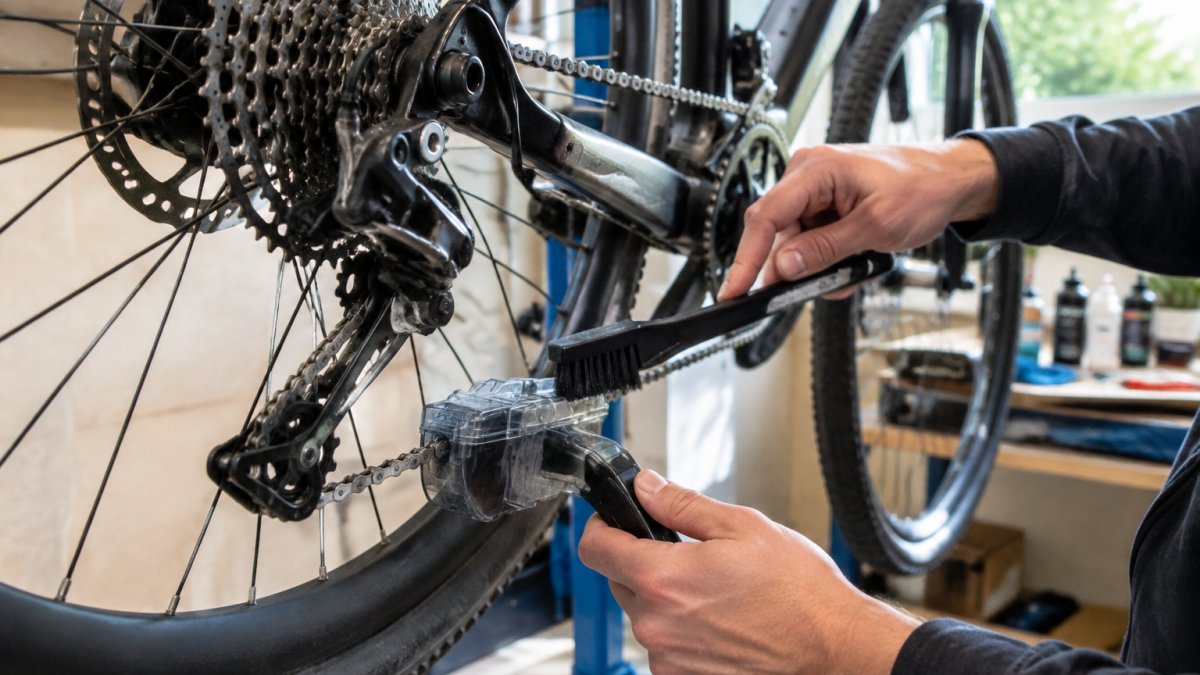
Back-Pedaling and Using a Chain-Cleaning Device or Brush
Back-pedaling is the core move in every on-bike method. Turn the cranks backward by hand while you scrub. The chain runs through the brush or device, and every link gets cleaned as it passes.
Method 1: Brush by hand. Hold a stiff chain brush against the moving chain and let the bristles work into the links. Our Chain Brush has a scraper for tough grime and stiff bristles for the rollers.

Method 2: Chain-cleaning device. Clip the device onto the chain, fill it with degreaser, and back-pedal. The device scrubs all sides of the chain at once and captures most of the dirty liquid inside its reservoir, so there is far less mess and less degreaser used per clean.
Method 3: Off-bike soak. For a removed chain, soak it in a tray of degreaser, then scrub and rinse. This is the deepest clean you can give a chain and the only method that reaches the inner surfaces of the rollers properly when a chain is heavily contaminated.
A practical rule most home mechanics settle on: use the device or brush for routine cleaning every few hundred kilometres, and reserve the off-bike soak for a full drivetrain overhaul or a chain that has been badly neglected. Once the chain is clean and dry, check its slack before riding, since adjusting chain tension is part of keeping the drivetrain running smoothly.
There are three on-bike cleaning methods, and they differ in mess, effort and how deep they clean.
| Method | Best for | Key difference |
|---|---|---|
| Brush by hand | Cheapest option, most control | You scrub every link yourself; degreaser drips |
| Chain-cleaning device | Moderately dirty chain, fastest option | Captures dirty liquid; chain only, not cassette |
| Off-bike soak | Deep restoration, badly neglected chain | Deepest clean; needs chain tool and tray |
How Long to Leave Degreaser on a Bike Chain
Leave degreaser on for roughly 3 to 5 minutes for normal grime. Heavy, baked-on grease may need a second application. Don't let it dry on the chain.
How do you know it is working? The grime starts to lift and the liquid turns dark and murky. That is the grease breaking down. If the chain still looks black after scrubbing, apply again rather than scrubbing harder.
Watch out: leaving degreaser on too long, or letting it dry in the sun, can leave a residue that attracts fresh dirt. Work in the shade and rinse promptly.
Scrubbing the Chainrings, Cassette and Rear Derailleur
The chain is only part of the job. Grime packs into the chainrings, cassette and rear derailleur pulleys, and a clean chain on a dirty drivetrain gets dirty again fast.
Apply degreaser to these parts, then scrub with the brush and scraper. Work the bristles between the cassette sprockets and around the derailleur jockey wheels. Back-pedal to reach every tooth.
For a focused roundup of products suited to this job, see our guide to the best degreasers for a bike cassette. Stubborn spots usually give way with a scraper and a second dose of degreaser.
Rinsing, Drying and Checking Cleanliness
Rinse the drivetrain with water or wipe it down with a wet rag. A light rinse keeps degreaser out of bearings; a rag works fine for a quick clean. Avoid a high-pressure jet, which pushes water past seals.
Dry the chain with a clean rag, then let it air for a few minutes. A dry chain takes lubricant better.
Now check the cleanliness. Run a finger along the chain. It should feel dry and free of grit, not slick with old oil. Spin the crank: a clean drivetrain runs quietly. If it still looks dark, repeat the degreasing step before you lubricate.
How to Lubricate a Bike Chain After Cleaning
A cleaned chain needs fresh chain lube right away. Bare metal rusts fast, and a dry chain wears quickly.
Apply chain lubricant to the inside of the chain while back-pedaling, one drop per link. Wipe off the excess so dirt has nothing to cling to. Let it settle for a few minutes before riding.
Match the lube to your conditions. Wet lube suits wet riding; dry lube suits dusty conditions. For help picking, read our guide on how to choose the right bike lubricant for every ride.
Choosing the Right Degreaser and Avoiding Common Mistakes
Degreasers are not interchangeable. The wrong one can dull paint, swell rubber seals, or strip the factory lubricant out of a chain's rollers and leave it dry. Match the product to your chain and frame materials before you spray anything.
Compatibility by material. Carbon frames and matte or satin paint need a gentler, water-based or plant-powered formula; strong solvent degreasers can leave a haze or lift a clearcoat if left to dwell.
What to avoid entirely. Brake cleaner, petrol, white spirit and similar workshop solvents are not bike degreasers. They attack paint and seals, are far more aggressive than the job needs, and carry real fire and fume risks.
Dwell time and drying. Leave degreaser on for roughly 3 to 5 minutes for normal grime, and do not let it dry on the chain. A dried film concentrates residue and attracts fresh dirt. Work in the shade and rinse promptly.
Protecting the bike and the area. Cover disc brakes, brake pads and carbon contact points with a rag before you start, degreaser on brake pads ruins stopping power, and that is a safety issue, not a cleaning one.
Common mistakes to avoid:
- Using brake cleaner or petrol, which can damage paint and seals
- Letting degreaser dry on the chain
- Skipping the cassette and derailleur
- Over-lubricating after cleaning
- Rinsing with high pressure near bearings
- Relubricating before the chain is fully dry
- Spraying from too far away, so product lands on the frame and floor instead of the chain
Safety and disposal. Work in a ventilated space, a garage with the door open or outdoors, and wear nitrile gloves and eye protection when handling solvent-based products. Avoid skin contact and do not smoke near solvents.
For a deeper comparison of frame-safe options, see our roundup of safe degreasers for expensive bike frames.
Frequently Asked Questions
Should you apply bike chain degreaser to a dry chain?
Yes. Apply degreaser to a dry chain so the formula can grip the grease and grime directly instead of being diluted by water. Brush off loose dirt first, then spray or drip the degreaser along the chain while slowly back-pedaling. A dry chain also lets you see when the degreaser starts lifting residue, which helps you judge how long to leave it on.
Do you need to rinse a bike chain after using degreaser?
You do need to remove the degreaser residue, either by rinsing with water or by wiping the chain thoroughly with a clean cloth. Leftover degreaser strips fresh lubricant and attracts dirt. If you rinse, dry the chain completely before applying chain lube. A wipe-down works well for daily maintenance, while a full rinse suits a deep clean.
How often should you degrease a bike chain?
Degrease when the chain looks black, feels gritty or runs noisily. In wet or dusty riding conditions, a full degrease every few weeks is sensible; in dry weather, monthly is often enough. Between deep cleans, wipe the chain and reapply chain lubricant. Over-degreasing wastes product and can push solvent into the chain rollers, so judge by condition rather than a fixed calendar.
Can you use bike chain degreaser on carbon fibre components?
Use a mild, pH-neutral degreaser around carbon fibre and painted finishes, and keep strong formulas off those surfaces. Apply the product to the chain and drivetrain, not the frame, and wipe up any overspray immediately. Airolube's Daily Degreaser is described as gentle enough to remove dirt and grease without damaging paint or carbon, which makes it a sensible choice for bikes with expensive components.
A grimy drivetrain saps your power and wears out parts faster. The fix is a simple routine: degrease, scrub, rinse, dry, relubricate. Airolube makes that routine easier with plant-powered formulas that are free from PTFE, PFAS and hazard symbols, and safe on coatings. Start with our Power Degreaser and Chain Brush, and get free shipping on orders from €49. Get started with Airolube and keep your drivetrain running clean, quiet and ready for every ride.
